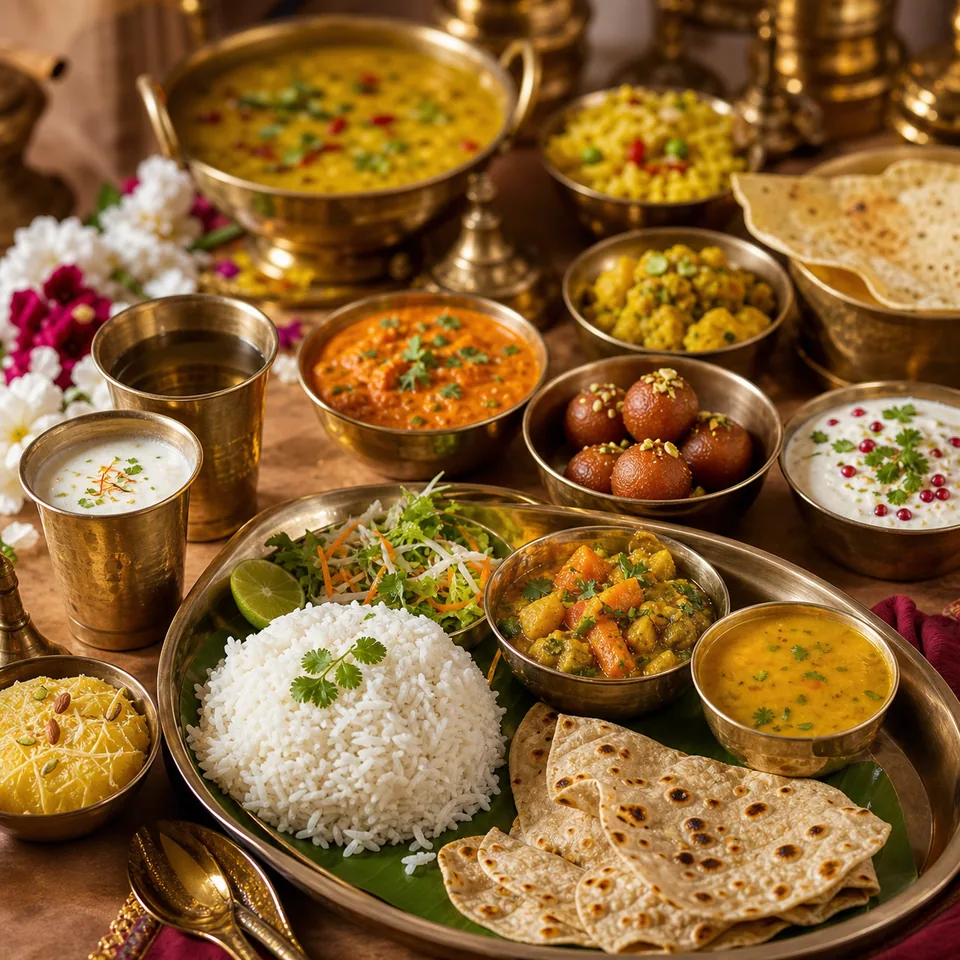
What does prasādam mean?
Prasādam means mercy. It is food lovingly prepared and offered to Kṛṣṇa, then shared with others as a gift of grace. In the temple, prasādam is part of the spiritual experience: it nourishes the body while inviting gratitude, respect and connection with God.
Food as an offering
In the Bhagavad-gītā, Kṛṣṇa explains that He accepts even the simplest offerings when they are offered with love and devotion. Therefore, the essence of prasādam is not the richness of the meal, but the mood in which the food is prepared and offered. Love, gratitude and sincere intention give the meal a deeper meaning.
Why prasādam is special
Because food sustains life, the way we choose, prepare and receive it matters. The bhakti tradition encourages a way of eating with less violence, more gratitude and greater awareness. In ISKCON, vegetarian food without meat, fish or eggs is prepared, and when it is offered to Kṛṣṇa with love, it becomes prasādam — food free from karmic reaction.
Prasādam in the temple
For many visitors, prasādam is one of the warmest first experiences of the temple. After the program, devotees and guests often share prasādam together, talk and get to know one another in a relaxed atmosphere. It is a simple and natural way to feel the spirit of the community.
Begin at home
You can begin with offering food at home as well. Prepare vegetarian food, place it before Kṛṣṇa or a picture of Him, say a short prayer or chant the mahā-mantra, and then accept and enjoy the food with gratitude.